|
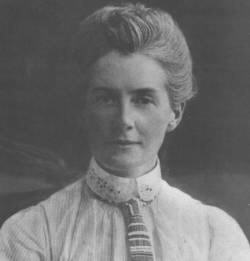
This is story of how the " Unknown Warrior" was selected and finally laid to rest at Westminster Abbey: And Edith Cavell who sheltered British soldiers by funnelling them out of occupied Belgium to neutral Holland.
|
|
|
On the stroke of midnight on 7 November, 1920, Brigadier General
L. J. Wyatt, General Officer Commanding British Troops in France and Flanders, entered
a hut near the village of St Pol, near Ypres in northern France. In front of him were the remains of four bodies, all of them lying under Union flags.
Earlier that afternoon, the bodies had been disinterred from unmarked graves in each of the main battlefields, the
Aisne, the Somme, Arras and Ypres. Four blank crosses had been chosen from the forest of crosses that now covered the shell-pocked French landscape. |
|
|
In death, the body was to enjoy a fate that would, in all probability, have been unthinkable in life. Feted by the King-Emperor, attended with the most
lavish pomp and solemn ceremony that the country could muster, this anonymous collection of bones was about to become the focus of a nation’s
grief. It was only two months earlier that the idea for a Tomb of the Unknown Warrior had finally been approved. The proposal, however, had been around for
some time, floating back and forth from Westminster to Buckingham Palace on tides of nervousness and
scepticism. Although he was to receive little thanks for his initiative, it had originated in the mind of a former Army padre, the
Rev David
Railton. |
|
|
After the Armistice, Railton wrote to Sir Douglas Haig, commander in charge of British Forces, suggesting that the body of an unknown soldier might be buried in Westminster Abbey as a symbol for all those grieving parents and widows who had no grave to visit. Haig, however, didn’t bother to reply. Railton might have given up there, but his wife, who reputedly told him, ' It's now or never’, encouraged him to have another go. And so he wrote to the Dean of Westminster, the Rt Rev Herbert Ryle. This time, the response was more positive. Although Ryle rejected Railton’s suggestion that the grave should be known as the Tomb of the Unknown Comrade — this smacked of Bolshevism — he was greatly taken with the idea. So taken that he immediately wrote to George V, David Lloyd George, the Prime Minister, and the War Office. |
|
|
|
|
|
On the morning of 10 November, the coffin was taken to Boulogne. With it were six barrels of earth from the fields of Flanders. In Boulogne, the mile-long cortege passed through the streets of the town to the strains of a military band playing Chopin’s Funeral March. Children had been given the day off school and they joined the townspeople lining the streets. On the dockside, Marshal Foch of France gave a speech praising the fortitude and bravery of British soldiers. He also offered to accompany the coffin onto British soil. However, this offer was rejected as being inappropriate. Along with the six barrels of earth and four wreaths so large that it took four soldiers to lift each of them, the coffin was carried aboard the Royal Navy destroyer HMS Verdun. In the middle of the Channel the Verdun was met by another six destroyers. As she approached, the destroyers lowered their Union Jacks and ensigns to half-mast, an honour usually reserved for the King. Then the seven ships headed for Dover. |
|
|
|
|
As the train made its way to London, every station it passed through was filled to overflowing. People stood in silence and bowed their heads as the white-roofed luggage van went by. By now it must have been apparent to the most hardened sceptic that Railton’s idea had caught the public imagination to a degree that not even he had dared dream of. The whole country, it seemed, was eager for a sight of the coffin – eager to project onto its anonymous occupant the features of loved ones they would never see again, who would never come home. When the train arrived at Victoria Station, thousands of people tried to push aside temporary barriers and extra police had to be drafted in to deal with the crowds. That night, the luggage van stood in darkness on one of the platforms. Inside, four guards stood watch — they were relieved at 30 minute intervals. Having been rather slow to pick up on the mood of the country, the British press — or sections of it anyway – now began speculating feverishly about the identity of the body. Since the soldier in question had been killed in the earlier part of the war, could he have been a member of the original Expeditionary Force? In truth, of course, no one had a clue who he was. There were no clues — Brig Wyatt had seen to that. Naturally, this did nothing to dampen speculation. The Daily Express went so far as to claim that it had thought up the whole idea. Shortly after nine o’clock the next morning, 11 November, a bearer party of eight guardsmen entered the luggage van. The coffin was placed on a gun carriage. Behind it, already assembled in line, were the heads of the Armed Forces and 400 former servicemen, standing four abreast. At 9.40, in pale winter sunlight, the parade moved off. An enormous crowd — the largest seen in the capital – watched as the coffin was borne through the streets. There was no sound except for people sobbing and the clop of horses’ hooves. As an outpouring of public grief, only the funeral of Diana, Princess of Wales nearly 80 years later has ever matched it.
|
|
|
|
An hour after it left Victoria Station, the coffin arrived at the Cenotaph. There it was met by the King, who placed his own wreath on top. As the chimes of Big Ben sounded 11 o’clock, the coffin was carried through the north transept door of Westminster Abbey. There, the aisle was lined with 100 recipients of the Victoria Cross. The congregation was made up of 1,000 widows and mothers of the fallen. No representatives of any foreign government had been invited. |
|
Within five days, more than a million people had paid their respects — the population of inner London at the time was four-and-a-half million. As for the Cenotaph, this was all but buried beneath 100,000 wreaths. On the same day, the French also laid the remains of their Unknown Warrior to rest – they, too, had picked up on Railton’s idea. But somehow the French never took their Unknown Warrior to their hearts in the way the British did. Amid all the public anguish, no one thought to wonder what had become of the other three bodies that had been disinterred from their unmarked graves. A rather less exalted fate awaited them. After Brig Wyatt had made his choice, the Union flags were folded away. Then the three bodies were loaded onto the back of a truck, tipped into a shell hole beside the road near the town of Albert – promptly forgotten.
|
|
|
|
|
|
BENEATH THIS STONE RESTS THE BODY
|
|
|
Around the main inscription are four texts:
|
|
|
|
|
|
|
I was a Licensed London Driver for 36 years and drove passed her statue 1000's of times (between Trafalgar Square and Charing Cross Road) ... I never had a clue who of what she did, until now. Read more here |
|
Edith Cavell |
|
|
|
|